
Prof. Dr. Nurullah Ermiş
Arthroscopic Surgery
Arthroscopic Surgery Nedir?
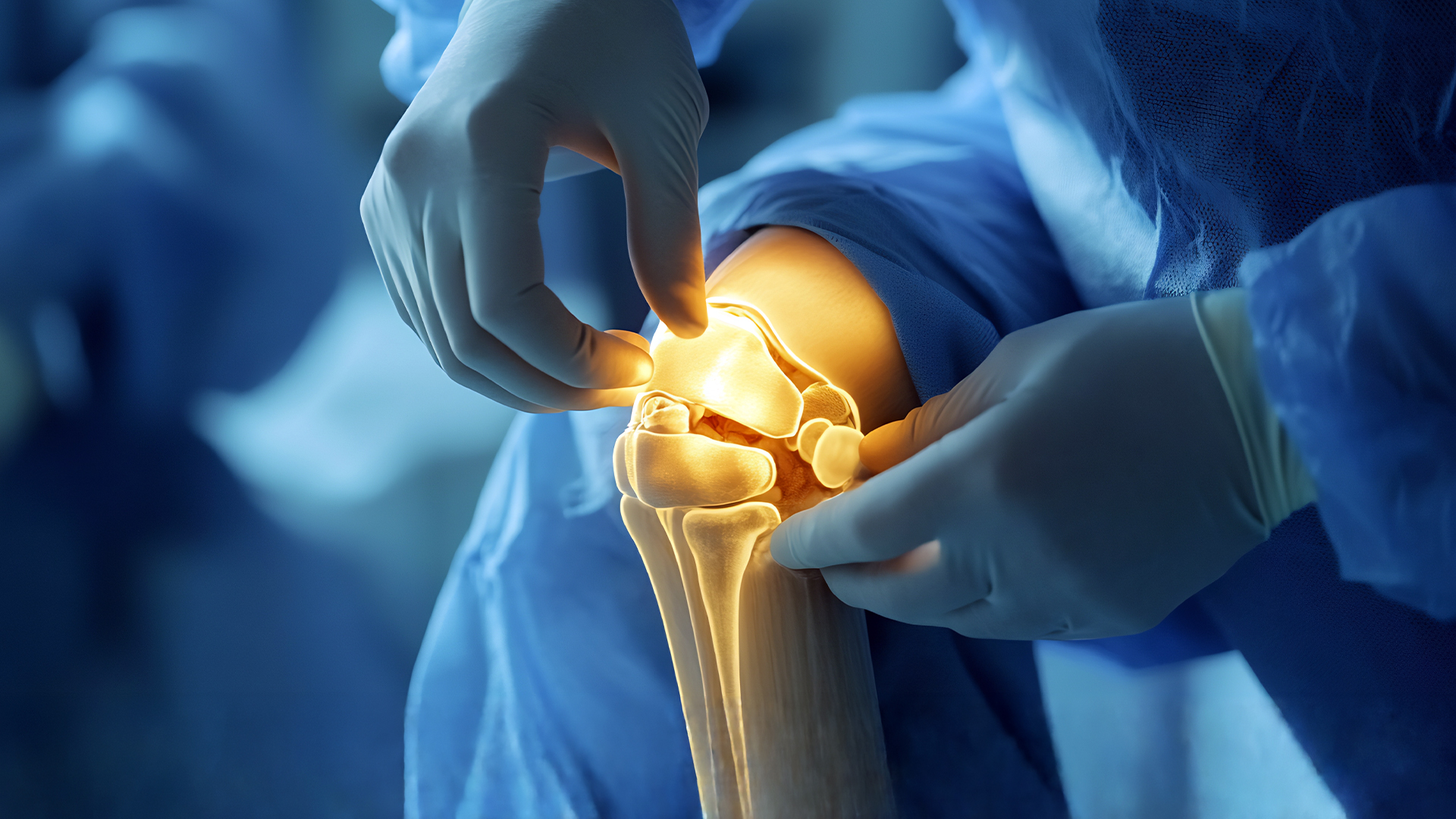
Arthroscopy is a minimally invasive technique in which a telescopic camera (arthroscope) and specialized surgical instruments are introduced into the joint through incisions of only a few millimeters, enabling both detailed visualization of the joint interior and precise surgical treatment in the same procedure. It can be applied to all major synovial joints, most commonly the knee, shoulder, hip, elbow, and ankle. Compared with open surgery, the core advantages of arthroscopy are substantial: damage to the surrounding muscles and ligaments is kept to a minimum, postoperative pain and swelling are significantly reduced, hospital stay is shorter, incision scars are nearly invisible, and rehabilitation is completed far more rapidly. These characteristics make arthroscopic surgery the first-choice approach for athletes and active patients.
Meniscal tears and anterior cruciate ligament (ACL) ruptures are among the most common indications for arthroscopy. Sports injuries, athletic activity, or trauma that cause these joint lesions can be treated with timely and accurate arthroscopic surgery, enabling the majority of patients to return to their previous level of function. In the shoulder, rotator cuff tears, SLAP lesions, and recurrent shoulder instability are the conditions that benefit most from an arthroscopic approach.
One of the greatest advantages of arthroscopic surgery is that the pathology inside the joint can be directly visualized in high definition and treated during the same session. This is especially valuable for athletes, active individuals, and patients who want to regain joint function quickly, as it improves both diagnostic accuracy and treatment precision while limiting tissue trauma.
Planning arthroscopic surgery still requires careful patient selection. The location of the tear, cartilage quality, instability pattern, age, sports demands, and duration of symptoms all influence whether repair, reconstruction, debridement, or conservative treatment is most appropriate. Especially in young and active patients, preserving joint tissue whenever possible is a key goal because it affects long-term performance and arthritis risk.
The postoperative pathway is just as important as the operation itself. Swelling control, range-of-motion exercises, gradual weight bearing, muscle activation, and return-to-sport testing must be tailored to the procedure performed. A meniscus repair, ACL reconstruction, and shoulder stabilization surgery all heal on different timelines, which is why a structured rehabilitation plan is essential for a durable result.
Belirtiler - Ne Zaman Doktora Gitmelisiniz?
- Sudden clicking, locking, or giving-way sensation in the knee
- Sharp, stabbing knee pain while walking, going down stairs, or squatting
- Instability and loss of control in the knee during sports or sudden changes of direction
- A sensation of a loose body or foreign object within the joint
- Shoulder catching, impingement, and pain when lifting or reaching behind the back
- Rapidly developing joint swelling after trauma (hemarthrosis)
- Prolonged pain and delayed swelling in the joint after physical activity
Tedavi Yöntemleri
Meniscus Surgery (Repair or Partial Removal)
The menisci are C-shaped fibrocartilaginous structures within the knee joint that distribute compressive loads, contribute to joint stability, and support articular cartilage nutrition. When a tear occurs, the choice of surgical technique depends on the tear type (longitudinal, transverse, bucket-handle, radial), its location (red zone/peripheral or white zone/central), and its acuity. For peripheral tears originating in the vascularized red zone, meniscal repair — suturing the torn tissue back together with arthroscopic techniques — is the preferred option, because preserving the meniscus is critical for long-term cartilage health and the prevention of progressive osteoarthritis. For more central, degenerative, or complex tears, only the torn fragment is removed while the healthy remaining tissue is preserved (partial meniscectomy). After repair, crutches and partial weight bearing are used for 4 to 6 weeks; after partial meniscectomy, most patients can bear full weight the following day.
Anterior Cruciate Ligament (ACL) Reconstruction
The anterior cruciate ligament (ACL) is one of the primary stabilizers of the knee joint, restraining anterior tibial translation, internal rotation, and valgus stress. Complete rupture is a common sports injury, particularly in athletes who participate in contact sports and activities requiring sudden changes of direction — football, basketball, skiing, and volleyball. Because the torn ACL cannot heal on its own, arthroscopic reconstruction with a tendon graft is required to restore joint stability. Graft sources include the hamstring tendon (semitendinosus ± gracilis), the central third of the patellar tendon, or allograft (donor tissue); the choice is based on the patient's age, activity demands, and surgical expertise. Femoral and tibial tunnels are drilled and the graft is placed in an anatomical position, fixed with bioabsorbable or titanium interference devices, and left to undergo biological incorporation (ligamentization). The postoperative rehabilitation protocol is of paramount importance: a properly designed neuromuscular rehabilitation program targeting strength, proprioception, and sport-specific movement patterns enables a gradual, safe return to sports within 6 to 9 months.
Shoulder Arthroscopy
The shoulder joint has the greatest range of motion of any joint in the body; the price of this extreme mobility is that it is also the most frequently affected joint for instability and rotator cuff pathology. In rotator cuff tears (supraspinatus, infraspinatus, and subscapularis), arthroscopic repair reattaches the torn tendon to the bone using specialized suture anchors; compared with open surgery, muscle disruption is minimized and recovery is notably faster. In SLAP lesions (superior labrum anterior-to-posterior tears), arthroscopic debridement or repair is performed depending on the lesion type and patient profile. In recurrent shoulder dislocations, a Bankart repair re-anchors the anterior labral tissue to the glenoid rim, restoring anatomical stability to the joint. For impingement syndrome and subacromial bursitis, arthroscopic acromioplasty and bursectomy are performed efficiently through very small portals with a rapid recovery course.
Sıkça Sorulan Sorular
Can a meniscus tear heal without surgery?
Small, peripherally located tears in the vascularized red zone have a degree of intrinsic healing potential and may be managed conservatively. However, tears that cause locking, persistent pain, limitation of motion, and disruption of daily activities benefit significantly from arthroscopic treatment. When concomitant chondral (cartilage) damage is present, the treatment approach is evaluated more comprehensively.
Can patients play football after ACL surgery?
Yes — but premature return and incomplete rehabilitation substantially increase the risk of re-rupture. After successful ACL reconstruction and completion of the recommended neuromuscular rehabilitation protocol, including passing strength and functional return-to-sport testing, field training can resume — generally from month 9 onward. Full return to contact sports and professional club training may extend to months 10 to 12; even for amateur footballers, a patient recovery timeline protects both the joint and long-term performance.
When can patients walk after meniscus surgery?
The surgical technique is the primary determinant of walking timing. After partial meniscectomy, which is often performed as a day-case procedure, patients can walk — with minimal or no support — the following day; a return to desk work is usually possible within 2 to 3 weeks, and light jogging within 4 to 6 weeks. Meniscal repair requires 4 to 6 weeks on crutches with restricted weight bearing to protect tissue healing; return to running and sports may take up to 4 to 5 months.
Is arthroscopy performed under general anesthesia?
Major joint arthroscopy — of the knee, shoulder, or hip — is most commonly performed under spinal anesthesia or general anesthesia; the choice is determined by the anesthesiologist's assessment, patient preference, and procedure duration. For smaller joints or purely diagnostic arthroscopy, a combination of local anesthesia and intravenous sedation may be sufficient. Both options are safe; ensuring that the patient experiences no pain or discomfort during surgery is the primary concern.
Arthroscopic Surgery için randevu alın
Prof. Dr. Ermiş ile uzman değerlendirmesi için hemen iletişime geçin.